Australia’s agricultural sector is accelerating its adoption of net replacement film bulk solutions, as farmers and suppliers alike pivot toward more efficient, robust and sustainable baling alternatives. This article explores key trends shaping the net replacement film bulk market, dives into its practical applications, and provides strategic insights on suppliers operating at scale.
Market Trends Driving Net Replacement Film Bulk in Australia
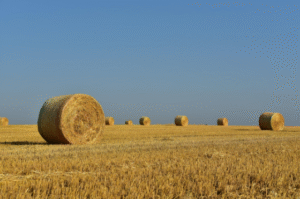
Net replacement film trends, applications, and insights
Strong demand for mechanised baling operations. Modern “combi” round‑baler/wrapper machines, such as McHale, Krone, Vicon, and Claas, increasingly rely on net replacement film rather than traditional netwrap. This shift is driving bulk orders of net replacement film across farms.
Rise of film-on-film technology
Export-quality multilayer LLDPE films made via five-layer extrusion are now preferred in bulk form. These films serve dual purposes as both bale wrapping and oxygen barrier layers, thereby aiding fermentation and reducing spoilage.
Sustainability and recyclability momentum
The broader Australian film market is experiencing growth in recyclable and biodegradable materials, influenced by government circular‑economy mandates and sustainability priorities.
Suppliers of net replacement film bulk are responding by offering compatible LLDPE products suitable for recycling systems.
Agricultural output and packaging dynamics
While plastic film manufacturing in Australia overall has seen a slight revenue decline (–3.7% CAGR through 2024), agricultural film applications remain resilient, driven by livestock and fodder demand.
Applications & Operational Advantages of Net Replacement Film Bulk
Film-on-Film Baling Efficiency
Using net replacement film bulk enables a dual‑function wrap: forming and compressing the bale while also providing an oxygen barrier layer. This streamlines operations by combining baling and wrapping in a single pass, saving labour.
Improved Bale Integrity and Feed Quality
Net replacement film bulk wraps ensure a consistent, cylindrical bale shape without weak points. Unlike netwrap, they eliminate the risk of thread breaks or protruding fodder. Tight compression and reduced oxygen penetration result in better fermentation, less mould, and higher feed protein yields.
Transport and Handling Durability
Bales wrapped in net replacement film bulk exhibit stronger surface integrity, retaining shape and size during transportation and handling—minimising damage and feed wastage.
Environmental Alignment
Since net replacement film and silage wrap share similar LLDPE composition, it simplifies recycling efforts. Used film can often be sorted and processed together. It contrasts with Net Wrap, which is harder to separate and recycle.
Supplier Landscape and Bulk Procurement Insights
Key Suppliers in Australia
Several domestic and international suppliers offer net replacement film in bulk. Brands like Unipak, SilageGuru, SilageWrap, and NetWrap Australia provide pre-configured roll sizes such as 1.28 m × 1,800 m × ≈19 µm and 1.38 m × 1,680 m in heavy roll quantities per pallet (typically ~20 rolls).
These suppliers emphasise production via five-layer LLDPE extrusion for high tear resistance, UV stability, and excellent adherence in film-on-film systems.
Ordering in Bulk: What to Know
- Roll dimensions and core compatibility: Confirm that bulk rolls match machine specifications (e.g. widths 1.28 m vs 1.38 m) and core size for automatic loading.
- Layer-count and additive packages: Multilayer films (5-layer) with UV stabilisers and cling additives are now standard in bulk selections.
- Pallet delivery and stacking: Bulk shipments come in pallets (~20 rolls per pallet). Confirm freight arrangements, stacking limits, and warehouse capacity.
- Pricing tiers: Bulk orders typically yield discounts. Wholesale pricing often excludes VAT/GST and transport charges—clarify total landed costs before contract.
Supply Chain and Logistical Considerations
Australia imports much of its plastic film inputs. The broader plastics film segment has grown in recent years, with a forecast 3.6–3.9% CAGR through 2035, led by China, Thailand, and the US as key suppliers of raw film materials. Suppliers in Australia may combine local production with international sourcing to meet quality and volume requirements.
Conclusion:
The net replacement film bulk market in Australia is undergoing a confident shift from traditional netwrap to high‑strength, film‑on‑film solutions tailored for modern baling systems. With operational advantages including strength, bale quality, and feed yield improvements—and underpinned by sustainability and supply chain evolution—this product category is redefining forage packaging.
Stakeholders that understand the specifications, assess supplier capabilities, and align purchases with bale wrapper compatibility will be best positioned to capitalise on the efficiency and performance gains. As innovations in recyclable, innovative films continue to emerge, the net replacement film bulk market offers both practical benefits today and strategic opportunities for tomorrow.
Comments are closed, but trackbacks and pingbacks are open.